
Top 5 Shocking Mistakes Indians Make with Their First Salary
There’s something magical about receiving your very first Salary. That text notification or email alert from the Bank doesn’t just show money—it represents independence, pride, and the beginning of a new financial journey. But while the excitement is natural, it’s also the stage where many young professionals slip into financial habits that can hurt them later in life.
The truth is, your first income is more than just money; it’s a chance to set the tone for your future relationship with finances. Unfortunately, in the rush to celebrate, most people ignore key steps that could help them build stability and long-term wealth.
So, let’s dive into the top five mistakes young Indians often make with their first Salary—and how you can avoid them to secure a brighter future.

1. Spending Without a Plan
The thrill of seeing your first income often leads to spontaneous splurges—expensive gadgets, shopping sprees, parties with friends, or even booking that long-awaited vacation. While there’s nothing wrong with treating yourself, the problem arises when you have no plan in place.
Think of your Salary as a limited resource. If you blow through it in the first week, you’ll struggle by the end of the month and may even end up borrowing. This not only dents your savings but can also create a cycle of financial stress.
How to avoid this mistake:
- Start with a simple monthly budget. Divide your income into categories like essentials (rent, groceries, transport), savings, and discretionary spending.
- Follow the 50-30-20 rule: 50% needs, 30% wants, 20% savings.
- Use budget-tracking apps to keep an eye on where your Salary is going.
Planning doesn’t mean you can’t enjoy your money—it just ensures you don’t regret your choices later.
2. Ignoring the Importance of Savings
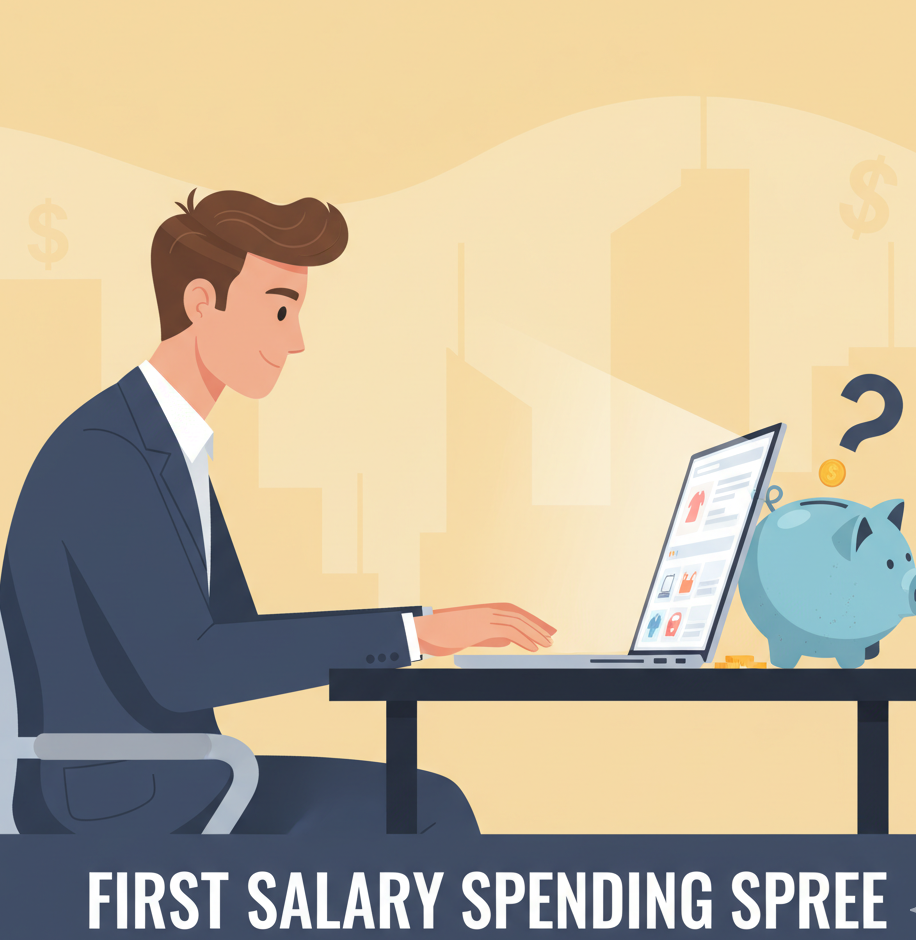
A common mistake with the first Salary is thinking, “I’ll start saving later when I earn more.” The reality is, if you can’t save from your current income, you’re unlikely to save even when your Salary grows. Lifestyle expenses have a way of increasing just as fast as earnings.
Savings are the foundation of financial security. Whether it’s an emergency, a sudden job loss, or a medical issue, savings are what keep you afloat without having to depend on credit cards or loans.
How to avoid this mistake:
- Start small. Even saving 10% of your first Salary matters more than you think.
- Open a recurring deposit or a systematic investment plan (SIP) to make saving automatic.
- Build an emergency fund that can cover at least three months of expenses.
When you save from the start, you build the habit of paying yourself first. That’s the smartest way to grow wealth over time.
3. Neglecting Financial Literacy
Many young professionals treat their Salary as simple cash-in-hand without really understanding how money works. But the earlier you learn financial literacy, the stronger your future foundation will be.
Not knowing about taxes, investments, or the importance of insurance can cost you heavily. For example, failing to declare tax-saving investments can reduce your take-home Salary, or ignoring insurance could leave you vulnerable to unexpected expenses.
How to avoid this mistake:
- Learn about personal finance basics—tax-saving schemes, mutual funds, insurance, and retirement planning.
- Use part of your Salary to enroll in courses or buy books on financial literacy.
- Follow credible finance blogs and government resources to stay updated.
Remember, your Salary can either work for you or against you—it all depends on how much you understand about managing it.

4. Falling Into Debt Traps Early
The moment you get your first Salary, credit card offers start pouring in. While credit cards can be useful, they’re also a slippery slope. Many young earners use them recklessly, leading to unpaid bills, late fees, and rising interest rates.
Living beyond your means because “I’ll pay it off with my next Salary” is one of the most damaging habits you can develop. Over time, it leads to debt cycles that eat away at both your earnings and peace of mind.
How to avoid this mistake:
- If you get a credit card, use it wisely and always clear the bill in full.
- Never let your monthly Salary become a safety net for reckless purchases.
- Borrow only when absolutely necessary and within your repayment capacity.
A debt-free start ensures that your Salary builds assets, not liabilities.
5. Forgetting Long-Term Goals
When you’re in your early 20s, retirement feels like a lifetime away. That’s why most people don’t think about long-term goals when they receive their first Salary. But here’s the catch—the earlier you start, the less effort it takes to build wealth.
Investing even a small fraction of your Salary in your 20s can snowball into massive savings by the time you’re 40 or 50. Compounding works best when given time, and you can only get that advantage if you start early.
How to avoid this mistake:
- Identify long-term goals like buying a home, traveling the world, or achieving early retirement.
- Allocate a portion of your Salary to long-term investments like mutual funds, stocks, or retirement plans.
- Review your goals yearly and adjust your strategy as your Salary increases.
Thinking ahead ensures that your Salary not only supports your present lifestyle but also secures your future.
Final Thoughts
Your first Salary will always hold a special place in your heart. It’s a milestone worth celebrating, but it’s also the moment to start building financial discipline. Spending carelessly, ignoring savings, and falling into debt are mistakes that may seem small now but can cost you years of stress later.
By avoiding these five mistakes, you give your Salary the power to shape your dreams instead of limiting them. Think of it this way—every rupee from your Salary has a purpose. The smarter you assign it, the faster you’ll achieve financial freedom.
So go ahead, enjoy your first Salary, but let it also mark the start of a smarter financial journey. Because at the end of the day, it’s not just about how much Salary you earn—it’s about how wisely you use it.
Disclaimer:
This article is for educational purposes only and should not be considered financial advice. Income management and investment strategies may vary depending on individual circumstances. Readers are encouraged to consult with a certified financial advisor before making any major financial decisions.
More about first salary management
More about us: