
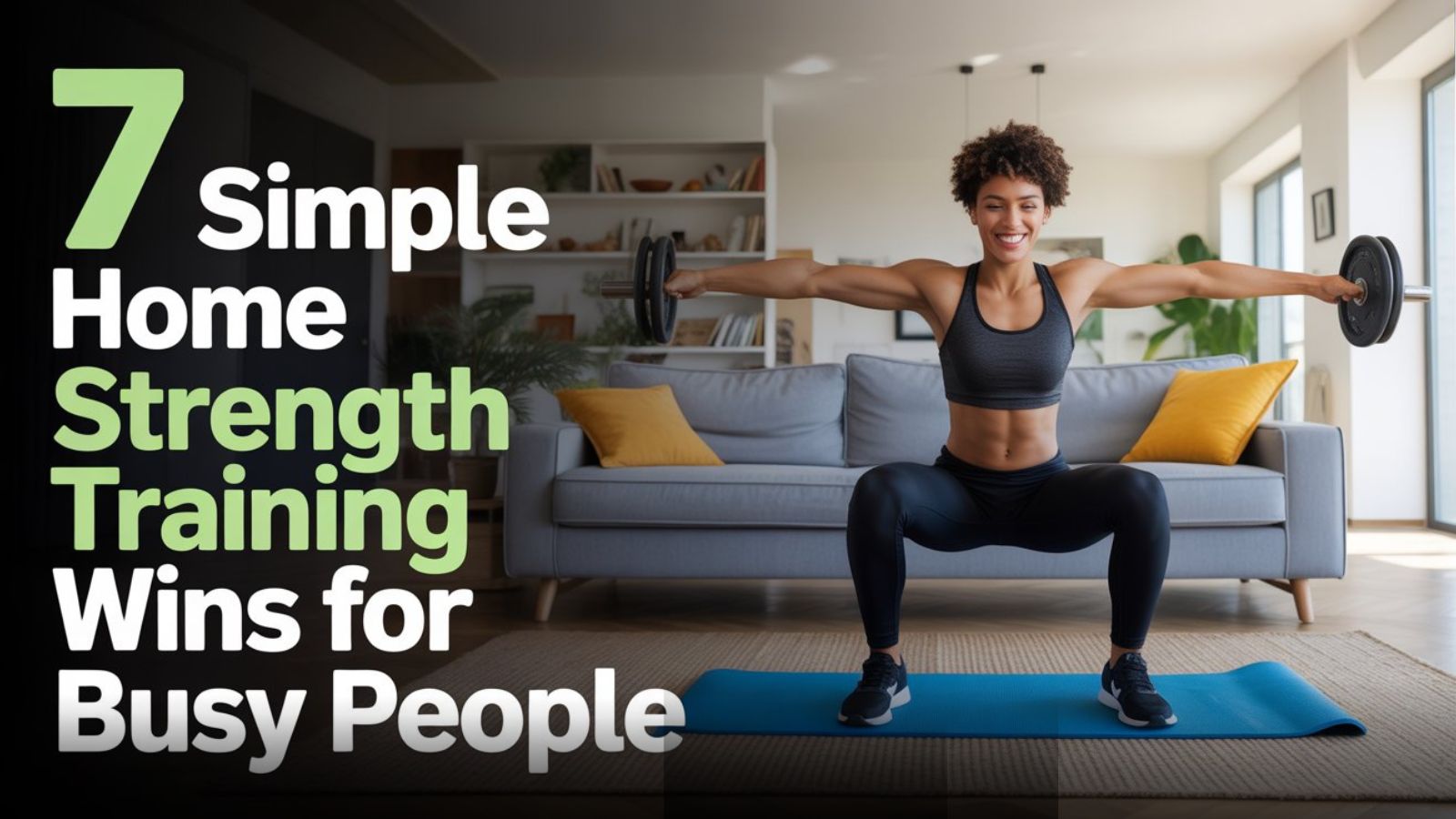
7 Powerful Home Strength Training Secrets That Work
I know you are busy. I also know you want to get stronger without going to a big gym or wasting hours. This article gives 7 clear and small wins you can use at home. Each win is easy to follow.These simple home strength training wins help you build real power at home. No hard words. No long theory. Just simple steps that work.
Read like I am standing next to you and showing what to do. Start small. Do one step at a time. Do not try to do everything in one day.
Table of Contents
Why these tips work
These tips focus on doing a little every day and getting better slowly. Small moves add up. You will gain strength with simple practice, safe progress, and good rest.That’s why short home strength training sessions are better than long random workouts. This is for people who have little time, little gear, and want real results.
Win 1 — Move often, not long
If you have only 15 to 25 minutes, use it well.
Pick 3 moves and do 3 rounds.
Example set for 15 minutes:
- Push-ups (or knee push-ups) — 8 to 12 reps
- Squats (bodyweight) — 12 to 15 reps
- Plank — 20 to 40 seconds
Do 3 rounds with 60 seconds rest between rounds.
This is short, honest work. Doing this 4 times a week gives good results.
Why it helps:
Short focused work makes your muscles adapt over time. It is easier to keep a habit when it is short.
Win 2 — Use slow and steady tempo
Slow down the move. Count in your head.
For example:
- Lower for 3 seconds, lift for 1 second.
This makes the muscle work more. If you are doing squats, go down slow. If push-ups are too easy, go slow while lowering.
Why it helps:
Slower reps increase muscle time under tension, which helps build strength even with no heavy weights.
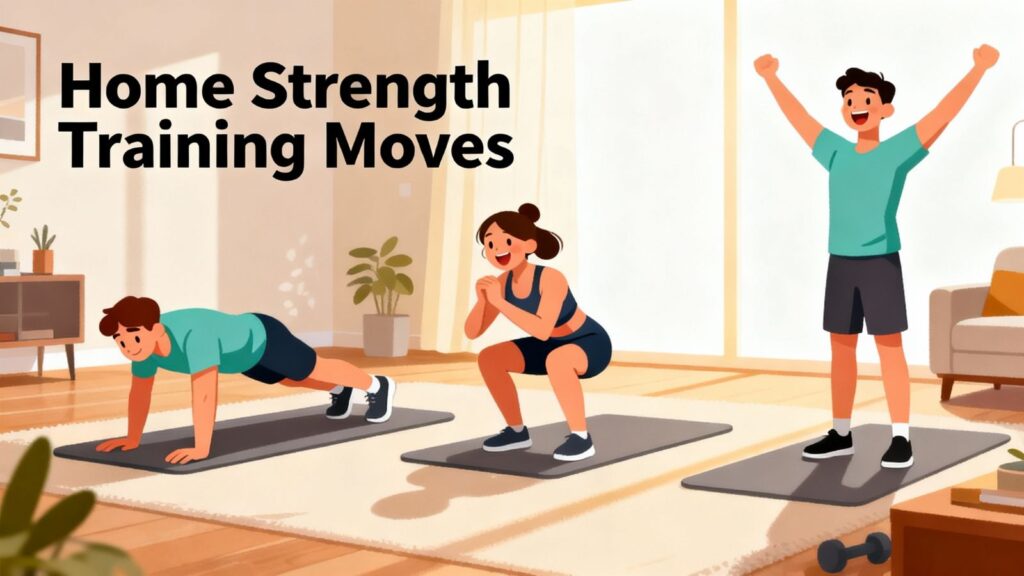
Win 3 — Learn the good form first
Good form keeps you safe and helps you grow stronger. Every safe home strength training move starts with good form and body control.
Simple rules:
- Keep chest up during squats.
- Don’t let knees go too far over toes when squatting.
- For push-ups keep a straight line from head to hips.
Practice in front of a mirror or phone. Watch and fix small errors.
If you are unsure, ask a trainer for a quick check or watch a trusted video once. But keep it simple and slow.
Win 4 — Use small tools smartly
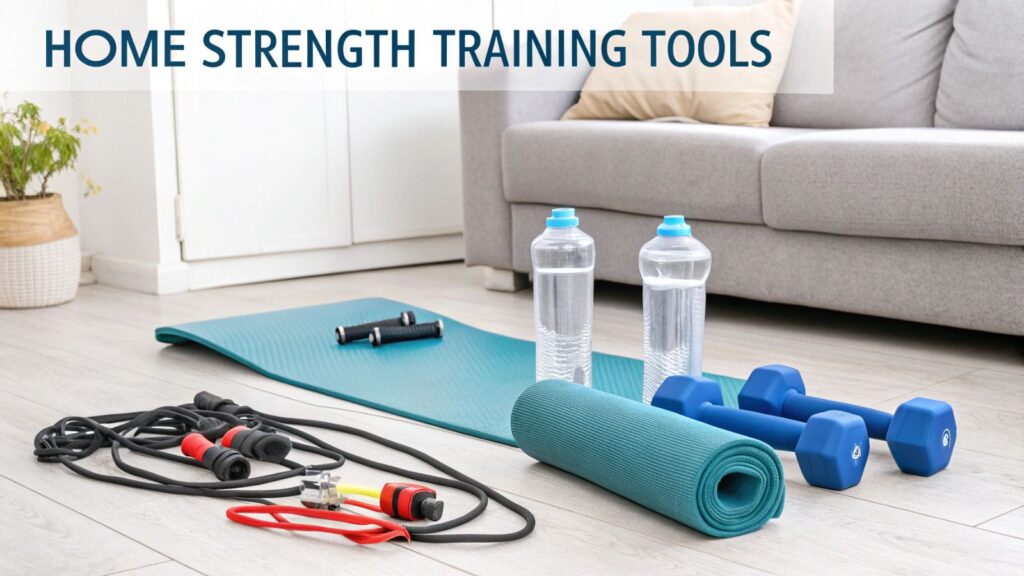
You do not need a big home gym. A few small tools help a lot:
- Resistance bands — cheap and very useful.
- A pair of dumbbells or a single adjustable dumbbell.
- A mat for floor work.
How to use bands:
- Band rows for back (anchor band to a door or pole).
- Band squats for added resistance.
Dumbbells help add load when bodyweight becomes easy.
If you cannot buy anything, use water bottles or a bag with books as weight.
The tool is small, the idea is consistent use.
Win 5 — Follow a Simple Home Strength Training Plan
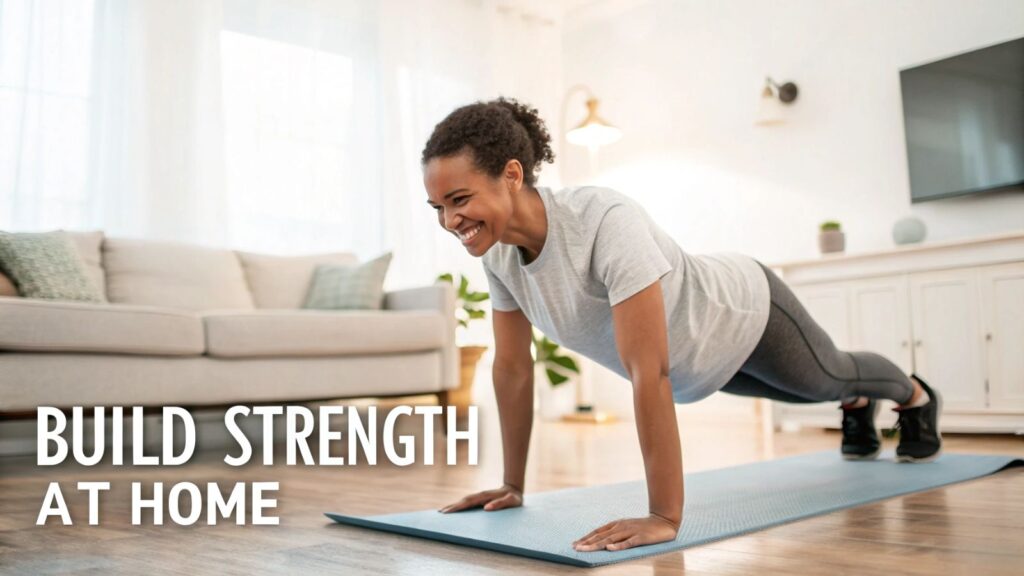
Make a plan you can follow for a month.
Example beginner plan:
- Day 1: Upper body (push-ups, rows, shoulder taps)
- Day 2: Lower body (squats, walking lunges, glute bridges)
- Day 3: Rest or short walk
- Day 4: Full body (mix of pushes, pulls, legs)
- Day 5: Mobility and core (planks, side planks, stretches)
- Day 6: Short HIIT 12 minutes (optional)
- Day 7: Rest
This plan keeps work balanced and simple. It also keeps your home strength training goals clear and easy to track. Change repetitions slowly each week — add 1–3 reps or one more set if a move feels easy.
Win 6 — Track small wins
Write down what you do each session.
Small records help you stay honest.
Note:
- Exercise name
- Reps and sets
- How you feel
After two weeks, look back and see progress. If you do not track, it is hard to know if you are improving.
Win 7 — Sleep and food help strength
You cannot build strength without rest and food.
Simple food tips:
- Eat a protein portion with each main meal (eggs, dal, paneer, chicken, fish, beans).
- Eat vegetable and fruit each day.
- Drink water often.
Sleep tip:
- Aim for 7 to 8 hours. Sleep helps your body repair and grow muscle.
This is not a diet plan. Just simple steps that help your work become useful.
Quick list of easy home moves to start with
- Push-ups (knee or full)
- Bodyweight squats
- Glute bridges
- Bent-over rows with water bottles or bands
- Plank and side plank
- Walking lunges (short space)
- Overhead press with dumbbell or bottle
Start with these moves. Learn form. Then add sets or weight slowly.
How to build progress without heavy weights
If you do not have heavy weights, you can still get stronger.
Ways to progress:
- Add more reps (for example from 8 to 12).
- Add more sets (for example from 2 to 3).
- Slow down each rep.
- Pause at the hard part of the move for 1 to 3 seconds.
- Use one leg or one arm to make a move harder (single-leg squat, single-arm row).
These small changes make your body adapt.
Short warm up and cool down
Warm up (3–5 minutes):
- March on spot or walk
- Arm circles and leg swings
- Light bodyweight squats
Cool down (3–5 minutes):
- Light stretching for chest, hamstrings, calves
This keeps you safe and reduces soreness.
Simple recovery tips
- Do light walking on rest days.
- Use a foam roller or a simple ball to massage sore spots.
- Do light stretching after workouts.
Recovery is part of the plan — not a break from it.
How to make this fit your busy day
If you work long hours, try these:
- Wake up and do a 10–15 minute set. It wakes you up and builds habit.
- Or do a short session in lunch break.
- Or do 10 minutes before bed (not too close to sleep).
Short sessions beat no sessions.
Common worries and easy fixes
I don’t have time
Do 10–15 minutes. Even 10 minutes is useful.
I can’t do full push-ups
Do knee push-ups or wall push-ups. Build from there.
My knees hurt during squats
Try shallower squats and focus on form. Add glute bridges and step-ups to build strength.
I can’t stay consistent
Make a simple habit: same time each day, small target, and track it.
Safety and when to see a doctor
If you have pain that is sharp, or joint swelling, stop and talk to a doctor.
If you have a long-term health problem, check with your doctor before starting a new exercise plan.
A simple example 4-week plan for a busy person
Week 1:
- 3 days of strength (15 minutes), 2 days walk, 2 rest days
Week 2:
- 4 days strength (20 minutes), 1 walk, 2 rest days
Week 3:
- 4 days strength (20–25 minutes), add small weight for one move
Week 4:
- 4 days strength, add a new move or extra set
This builds habit and slow progress. After four weeks, you will notice better energy and stronger moves.
How to keep the interest
Change small things:
- Add a new move every two weeks.
- Do a challenge with a friend.
- Record short videos to see progress.
This keeps the plan fresh and fun.
Why this works more than long hard plans
Big plans can feel scary and stop people.
Small wins feel doable. When you do small wins many times, it adds up to big change.
Final quick checklist before you start
- Choose 3 moves for your first 15-minute session.
- Practice form slowly.
- Track your work in a simple notebook.
- Eat protein, sleep well, and rest.
- Add one small change every week.
FAQs (short and useful)
Q: How many days a week should I train?
A: Start with 3 days a week. If you can, move to 4 days after two weeks. Rest days are important.
Q: How long before I see results?
A: You may feel small changes in 2 to 4 weeks if you are consistent. Visible changes can take 8 to 12 weeks. Small steps keep you long term.
Q: Do I need a trainer?
A: Not always. A trainer helps with form and plan. If you watch simple, trusted videos and use safe form, you can start alone.
Q: Can I lose weight with this plan?
A: Yes, with consistent effort and proper food choices. Strength helps keep muscle while you lose fat. But do not expect quick fixes. Slow and steady is best.
Q: Is it okay to do cardio and strength together?
A: Yes. Cardio helps heart health and burn calories. Keep cardio short on strength days or do it on separate days.
Q: What if I miss a day?
A: Do not worry. Start again next day. Missing once does not break everything.
If you’re looking to start strength training at home, this Beginner Bodyweight Workout from Nerd Fitness offers a simple, effective routine using just your bodyweight.
Disclaimer: This article is for informational purposes only. Always consult your doctor or a qualified fitness professional before starting any new exercise or strength training program. Perform exercises safely and listen to your body.
Also Read:
Habits That Build Wealth: 8 Powerful Ways to Transform Your Future