
7 Best Ways to Know Your Ayurveda Dosha Type (Vata, Pitta, or Kapha)
Hey — let’s keep this very simple and clear. I will talk to you like a friend. No big words. No long fancy sentences. If you read this slowly, you will know your dosha type by the end of this article. Then you can change small things in your life and feel better.
First, a tiny idea about dosha. In Ayurveda, the word “dosha” means the natural energy that runs your body and mind. There are three main doshas: Vata, Pitta, and Kapha. Everyone has all three, but one or two are stronger in you. That strong type shapes how you eat, sleep, feel, and react.
Now I will show you seven simple ways to find your main dosha. Use these steps one by one. Take notes. Be honest with yourself. This is not a test. It is a way to learn about yourself.
Table of Contents
1) Look at your body shape and size
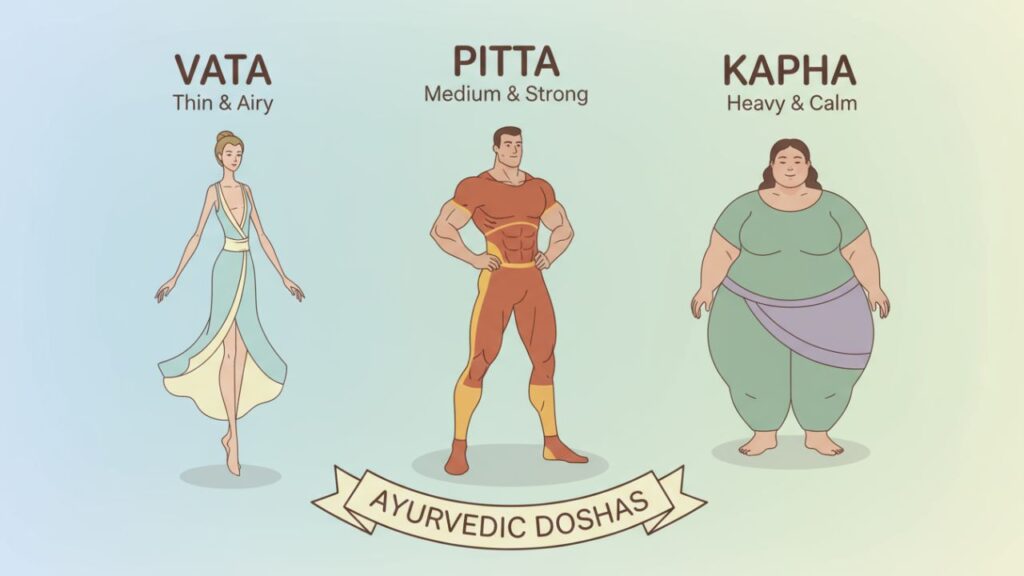
This is the easiest first step. Stand in front of a mirror. Look at your bones, muscles, and skin.
• If you are thin, bones show, and you feel cold often — you may be Vata.
• If you have medium build, warm skin, and you feel hot sometimes — you may be Pitta.
• If you are broad or heavy, have smooth oily skin, and feel solid — you may be Kapha.
Don’t stress if you are not fully one type. Many people are mixed. For example, you can be Vata-Pitta. Look for the main sign. One big sign is enough to start.
2) Watch your hunger and digestion
Pay attention to what happens after you eat.
• Vata: your hunger comes and goes. Sometimes you forget to eat. You may have gas or bloating.
• Pitta: you feel hungry at regular times. You digest food fast. You may feel burning or acidity.
• Kapha: you feel full quickly. You may not feel hungry for long. You may gain weight easily.
Try this: for one week, write down when you feel hungry, how your stomach feels after food, and if you feel sleepy after meals. This will tell you a lot.
3) Notice your sleep and energy
How you sleep and move during the day is a big clue.
• Vata: light sleep. You wake up easily. You may have many dreams. Energy comes in waves. Some hours you are active, some hours tired.
• Pitta: normal sleep. Sometimes you wake up because you feel hot. Energy is steady and sharp. You like to work and finish tasks.
• Kapha: deep sleep. You like long sleep. You may feel slow in the morning. Energy is steady but slow to start.
If you wake up tired even after long sleep, you might have Kapha. If you wake up full of ideas and can’t sit still, you might be Vata.
4) Check your mood and how you react
Your emotion style shows your dosha.
• Vata: you worry, you think a lot, you get anxious when things change fast. But you are creative too.
• Pitta: you get angry fast. You are driven. You want things done well. You can be sharp in talk.
• Kapha: you are calm, loving, and forgiving. But sometimes you feel lazy or stuck.
Here is a simple trick. Think about a bad day. How do you react? Do you get nervous (Vata), lash out (Pitta), or go quiet and slow (Kapha)? That reaction is a strong hint.
5) See how weather and seasons affect you
Pay attention to which weather makes you feel good or bad.
• Vata: you do not like cold, dry weather. Your skin gets dry. You feel restless in winter.
• Pitta: you do not like hot weather. You get irritated in summer.
• Kapha: you do not like wet, damp weather. You feel heavy and slow in rainy season.
Note the season when you feel best. That season tells what your body likes.
6) Watch habits and daily speed
How you move, talk, and work gives many clues.
• Vata: fast talker, quick walker, quick thinker. You start projects fast but may not finish.
• Pitta: medium speed but steady. You plan and you execute. You are often goal-driven.
• Kapha: slow and steady. You take time to decide. You are stable and reliable.
Look at your daily rhythm. Do you rush or move slow? That shows your dosha.
7) Try a simple self-check and a short quiz
If you still feel unsure, use a trusted dosha quiz. Many good Ayurvedic sites have short free quizzes. They ask about body, digestion, sleep, and mood. The quiz gives a result like “Vata dominant” or “Pitta-Kapha.”
But don’t only trust the quiz. Mix the quiz with what you saw in steps 1–6. If the quiz and your notes say the same, that is your dosha.
Small tests you can do at home
Here are a few short checks you can do right now. They are easy and safe.
Tongue check: look at your tongue in a mirror first thing in the morning.
• If it is very red or has a red rim, Pitta may be high.
• If it has a white thick coating, Kapha may be high.
• If it is dry and cracked, Vata may be high.
Pulse check (simple, not for medical use): gently feel your wrist. Does your pulse feel fast and light (Vata)? Strong and steady (Pitta)? Slow and steady (Kapha)? This is just a hint, not a diagnosis.
Bowel habit: see how often you pass stool. Regular and normal is good. If it is too loose or too hard often, that points to imbalance.
What to do once you know your dosha
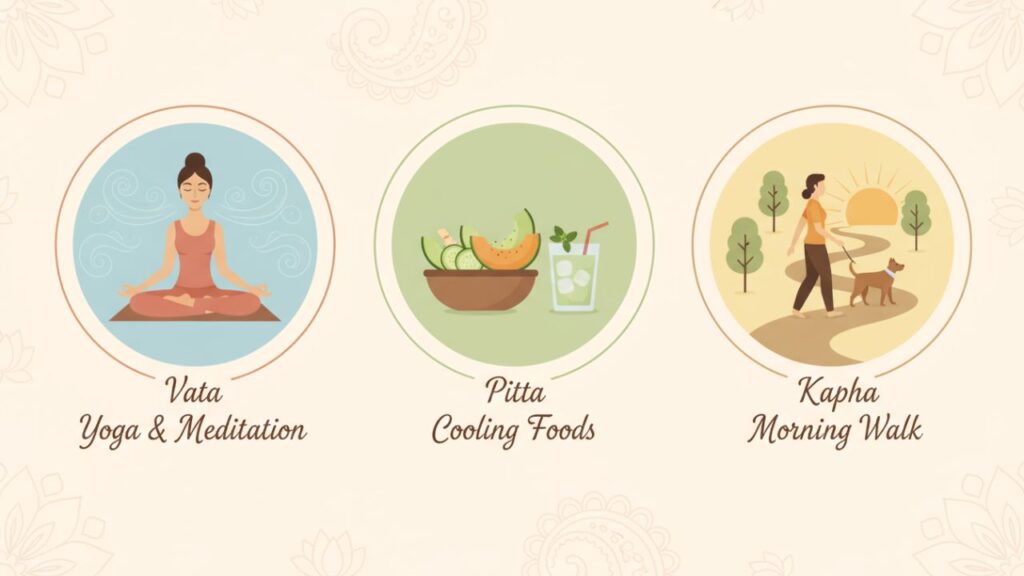
Knowing your dosha is only the start. Next, make small changes. Don’t try to change everything. Pick one or two things and keep them for a few weeks. Watch how you feel.
If you are Vata:
• Eat warm cooked food. Avoid cold drinks and raw salads at night.
• Keep a regular routine. Sleep and wake at same time.
• Do gentle exercise like walking or simple yoga.
• Use a little warm oil for massage now and then.
If you are Pitta:
• Eat cooling foods like cucumber and sweet fruits. Avoid very spicy and fried foods.
• Stay out of strong sun. Take short cool breaks in day.
• Practice calming activities: slow walk, music, breathing.
• Avoid very hot showers.
If you are Kapha:
• Eat light and dry foods. Add spices like ginger and pepper.
• Exercise in the morning. Keep moving during the day.
• Avoid heavy meals at night.
• Keep warm and dry; avoid long naps.
Small daily steps that help all types
These are small actions that work for everyone. Try them for one month.
• Drink a glass of warm water after you wake up. It helps digestion.
• Walk for 20–30 minutes daily. Movement wakes your body.
• Sleep early and try to wake up at a fixed time. Routine helps balance.
• Eat simple, fresh food. Avoid too much packaged junk.
• Breathe for three to five minutes when you feel stressed. Simple breathing calms quickly.
A simple one-month plan you can follow
If you want, follow this easy plan. It is not strict. It just helps you start.
Week 1: Watch and note. Look at body, digestion, sleep, and mood. Keep a small notebook. One line a day.
Week 2: Pick one food habit and one routine habit to change. For example, warm water in morning and 20-minute walk after lunch.
Week 3: Add one more small habit like a short breathing session each evening.
Week 4: See what works. Keep what helps. Stop what does not help.
Small steps done daily bring big change in weeks. That is the real power.
Common mistakes people make
Do not rush. Don’t do all tips at once. People try everything and then stop. That wastes time.
Don’t follow random advice from too many places. Choose trusted sources. If you take medicine, do not stop it. Ask your doctor before change.
Do not expect miracles in two days. Give your body time. Two to four weeks is common for small changes to show.
Quick real stories
Ramesh: He was Vata. He had poor sleep and felt anxious. He started drinking warm milk at night and walking for 15 minutes before bed. After two weeks, his sleep was better.
Priya: She was Pitta. She had frequent heartburn. She reduced spicy food and drank a glass of cucumber water in the afternoon. She felt less burning in three weeks.
Asha: She was Kapha. She felt heavy and slow. She started morning walks and cut late-night sweets. After a month, she felt lighter and more active.
FAQs — quick and simple answers
Q: Can I have two doshas?
A: Yes. Many people are mixed like Vata-Pitta or Pitta-Kapha. That is normal.
Q: Can my dosha change?
A: Your basic dosha type stays mostly the same. But your balance can change with food, stress, and season. You can move toward balance with good habits.
Q: Is this for kids too?
A: Yes, simple habits help kids. But check with a pediatrician for any big change, and be gentle.
Q: Should I stop medicines if I try Ayurveda?
A: No. Do not stop any doctor’s medicine without asking your doctor. Talk to an Ayurvedic doctor if you want herbs or special treatments.
Q: How fast will I see results?
A: Small changes often show in 2–4 weeks. Bigger changes take more time. Be patient and keep simple habits.
Final words — start small, stay steady
Finding your dosha is not to label you. It is to help you. Once you know what fits your body, you can choose small things that make life easier. Do one small habit. Do it for one month. See how you feel. Then add one more.
Ayurveda is about balance. It is not about strict rules. Use what works for you and keep what makes you feel good.
Disclaimer: This article is for general information only. It is not medical advice. If you have serious health issues or take medicines, talk to a qualified doctor or an Ayurvedic practitioner before you change your diet or routine. Do not stop prescribed medicine without a doctor’s ok.
You can learn more about the three doshas and how they influence your mind-body type from the detailed explanation at Wikipedia’s Dosha page.
👉 Dosha – Wikipedia
Also Read: