4 Great Moves: Sustainable Finance Gen Z for Inner Peace
Look, I’m just going to be honest with you.
Talking about money? It’s awful. It’s boring, and honestly, it makes most of us feel stressed and totally inadequate. If you’re like me, or like any young person today—especially those of you in the Gen Z group—you’ve got more things to worry about than just how much cash is in your wallet. The old rules don’t address the massive pressure of debt or the constant worry about climate change. That’s why we need a new approach: one that combines financial growth with ethics. This is the core idea behind Sustainable Finance Gen Z.
We’re not just dealing with bills. We’re dealing with big, heavy questions: Is the planet going to be okay? Are the companies I buy from making things worse? Why do I feel this sudden wave of guilt after hitting the “Buy Now” button online?
That feeling of guilt? That worry about the future? That’s not your fault. The old, super strict rules about money were never designed for the world we live in today. They were all about saving every penny, wearing a financial straitjacket, and just generally feeling miserable.
We need a better plan. We need a way to manage money that doesn’t feel like punishment. It should feel like Financial Peace.
This guide is going to give you four incredibly simple steps. We’re going to break down how to stop worrying about money and start making it work for your actual life, your values, and yes, the planet too.
Table of Contents
Why Your Old Budgeting Style Is Broken
Seriously, have you ever kept a strict budget for more than three months? I haven’t. It’s nearly impossible.
The traditional budget is a recipe for failure. It’s always telling you what you can’t have. You feel deprived. You feel restricted. And then, one bad day happens, you buy a super expensive coffee, and boom—the whole thing explodes. Then comes the guilt.
But the stress isn’t just about overspending. It’s also about what we know now.
We’re constantly learning that our buying choices have big consequences. This creates two terrible, modern types of stress:
- Consumer Guilt: This is that heavy, sick feeling after buying fast fashion clothes or ordering too much food delivery. You know you shouldn’t have done it, or you suspect the company is exploiting workers or the environment. It just feels bad.
- Eco-Anxiety: This is the deep, nagging worry about the climate crisis. When you use your credit card, you might worry, “Am I accidentally funding a company that’s harming the earth?” It’s a real, heavy burden, and it makes managing money feel impossible.
Look, you don’t need a math degree to fix this. You need a shift in focus. We’re moving from boring, restrictive “Budgeting” to powerful, purposeful Mindful Spending and Sustainable Finance.
Step 1: Mindful Spending – Hit the Real Pause Button
Mindful Spending is the first, most powerful tool you have. It sounds fancy, but it just means paying attention.
It means you are completely awake and aware of why you are letting your hard-earned money leave your wallet. It’s the opposite of mindlessly tapping your card because an advertisement or your friend told you to.
Mindful spending actually lowers your stress levels. Why? Because you’re only spending money on things that genuinely make you happy. You stop buying junk that gives you five minutes of joy and five months of clutter.
The Big, Simple Idea: The 72-Hour Wait
Impulse buying is your biggest enemy. Those tiny, fast purchases add up to huge money over time. We need a trick, a simple one, to defeat it.
When you see something you want—and it’s not something you need to survive, like food or rent—do this:
- Stop everything. Do not click the button. Do not touch your card.
- Wait exactly 72 hours. This is three full days. Put the item in a digital “maybe” cart or write it down on a piece of paper. Then, forget about it.
- Check back. After the 72 hours are up, look at the item again. Ask yourself these two questions, honestly:
- Question A: Do I still really want this, or was it just a fleeting moment of boredom? Will this item add real value to my life 30 days from now?
- Question B: How many hours did I have to work to earn the money to buy this? Is this thing worth that much of my time?
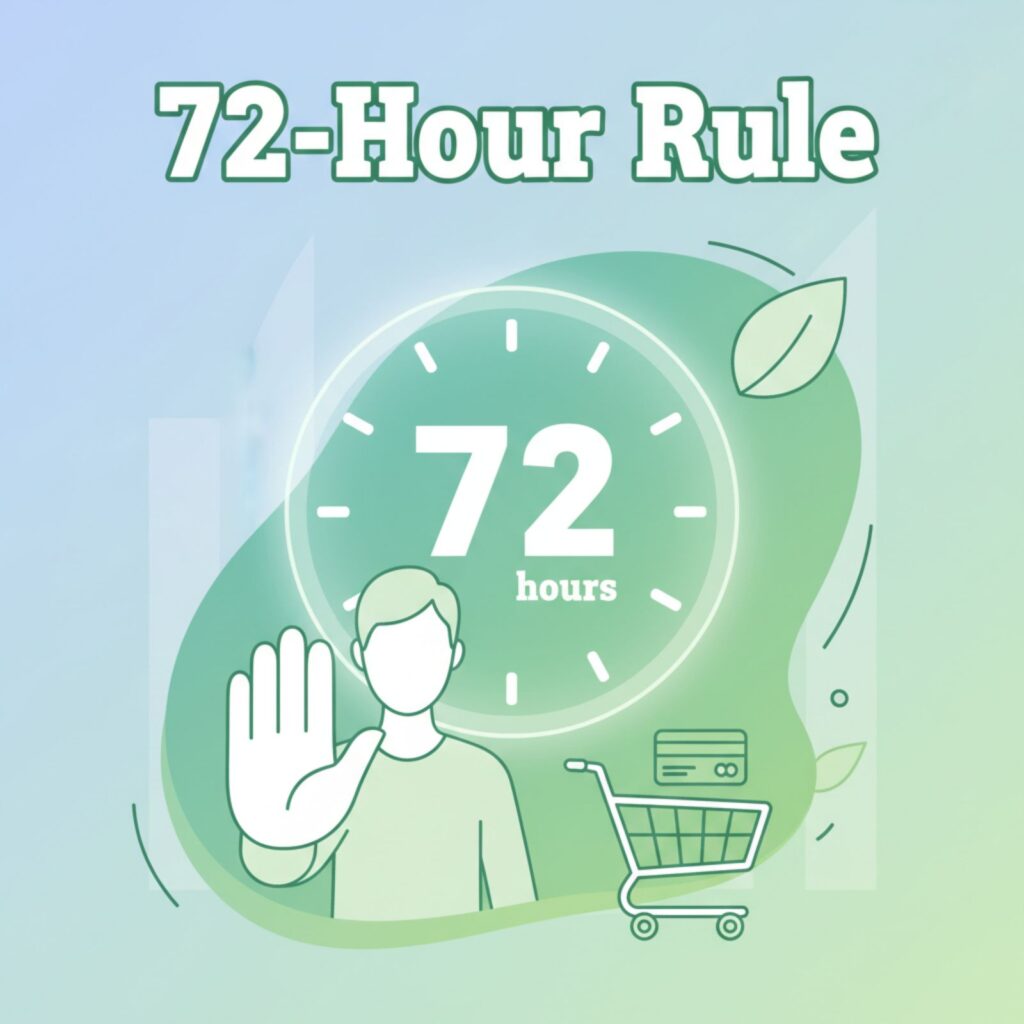
Trust me, 9 times out of 10, you’ll look at the item and think, “What was I even thinking?” You just saved money and avoided guilt. This 72-Hour Rule is a huge win for your Financial Peace.
Finding Your True “Value Categories”
Mindful spending doesn’t mean you must be cheap. It means you must be intentional. It says: Spend freely on the things you truly value, and cut mercilessly on the things you don’t care about.
Think about the last time you spent money and felt genuinely fantastic about it. That is your Value Category. For me, it’s always travel and good food. For you, maybe it’s fitness or learning.
Look at this table to see the difference. Be honest about where your money is going.
| Where Your Money Goes (Value vs. Guilt) | Good Spending (Value Categories) | Bad Spending (Guilt Categories) |
|---|---|---|
| Experience vs. Stuff | Investing in a weekend trip, concert tickets, or a fun experience with friends. | Buying another random gadget or decorative item that will collect dust. |
| Health and Growth | A good subscription for a learning app, high-quality shoes for running, or a cooking class. | Paying for six streaming services you rarely watch, or cheap gym clothes that fall apart fast. |
| Ethical Choice | Buying high-quality, long-lasting furniture, or supporting small, local businesses in your town. | Buying super cheap, disposable items (like fast fashion) that you know are poorly made and harmful. |
Your Simple Action Right Now: Grab a notebook. Write down the top three things that bring you the most satisfaction and joy. This is where your money gets priority. Everything else? It gets the 72-Hour Pause. This is how you shift to Value-Based Budgeting.
Step 2: Fix That Debt – Get Rid of the Heavy Backpack
Before we can talk about saving the world with your investments, we have to talk about that heavy thing dragging you down: Debt.
Debt is just money you owe someone else. It’s like wearing a heavy backpack all day long. You can still walk, but it’s exhausting. And the worst kind of debt, the high-interest stuff like credit card debt, has a little hungry worm inside it. This worm eats your money every single day—that’s the interest.
If you are dealing with high-interest debt, forget about investing for a minute. Your number one goal is to kill that debt worm.
The Easy Way to Kill the Worm (The Avalanche Method)
Forget the complicated charts. This is the simplest, smartest plan:
- Identify the Enemy: Look at all your debts. Which one has the highest interest rate? That’s your hungriest worm, and that’s the debt we attack first.
- Pay the Minimum: Pay only the smallest, required amount on all your other, low-interest debts. Just keep them alive.
- Attack the Worm: Take every extra penny you can find—that money you saved using the 72-Hour Rule, your Side Hustle Money, any unexpected cash—and throw it at the highest-interest debt.
- Repeat: Once that one is completely gone, you take the money you were paying on it and immediately start attacking the next hungriest worm.
This saves you the most money over time and gives you this incredible feeling of relief. When you finally zip off that heavy backpack, you feel lighter, happier, and ready to tackle the future. Getting rid of bad debt is truly the first step toward Financial Wellness.
Step 3: Sustainable Finance – Your Money, Your Values
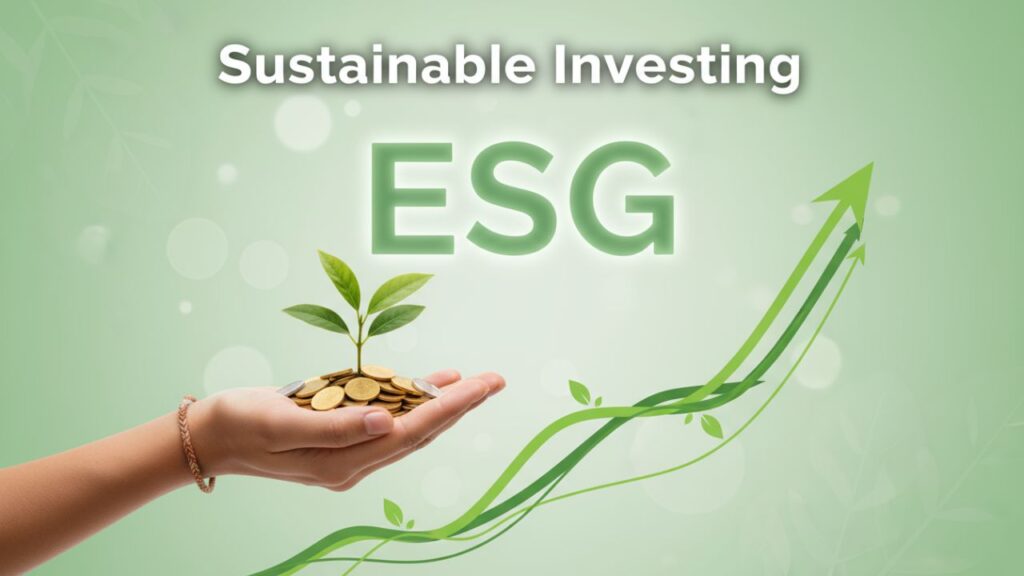
Okay, debt is handled, and you’re only buying stuff you actually like. Now, let’s make your money do some good work in the world.
This is the cool part. This is where your money starts telling the story of the kind of planet you want to live on. It’s called Sustainable Finance or Ethical Investing.
When your money sits in a regular bank, that bank uses it to fund things—maybe big oil companies, maybe companies that treat their workers poorly. Sustainable Finance is simply choosing to put your money only with the people and companies that are genuinely trying to make things better, not worse.
Don’t Panic About ESG
You’ve probably seen the letters ESG. It sounds like something only a millionaire investor should worry about, but it’s really just a simple report card for companies.
It’s how we judge if a company is behaving like a good citizen.
| Letter | What it Really Means (Simple Talk) | Why We Care |
|---|---|---|
| E – Environmental | How they treat the Planet. Are they polluting? Do they use clean energy? Do they waste water? | We want companies that protect our future, not damage it. |
| S – Social | How they treat People. Are they paying fair wages? Are the work hours okay? Do they help the local community? | We don’t support companies that exploit people to make money. |
| G – Governance | How the company Runs Itself. Are the bosses honest? Is there corruption? Do they have clear, good rules? | Honest leaders mean stable, reliable investments for us. |
When you buy an ESG Fund, you’re buying a basket of companies that scored high marks on this test. You’re using your financial voice to support the good guys. It’s a powerful way to practice Conscious Consumption without even buying anything.
Three Super Easy Ways to Start Ethical Investing
You don’t need thousands of dollars. You need to start small, right now.
- Find a Better Home for Your Cash: Check your current bank. Seriously, go look. If they’re funding things that make your stomach churn, find a new one. Switch to a local credit union or a smaller bank known for Eco-Friendly Banking. It’s easier than you think. This is the fastest way to make your money matter.
- Use Tiny Investment Apps: Today, there are apps that let you buy small bits of stock for just $5 or $10. Many of these apps have specific Sustainable Investment Funds or “green” portfolios built right into them. You just click, and your money starts helping fund solar power or ethical clothing companies. It’s perfect for beginners.
- Future-Proof Your Side Hustle: If you have any extra income—maybe from tutoring, selling things online, or just a small bonus—take a fixed percentage (say, 5% or 10%) of that Side Hustle Money and put it directly into an ESG fund. Don’t wait until you’re rich. Start today.
This is the big takeaway, the absolute, non-negotiable truth: Every dollar you spend or invest is a quiet, powerful vote for the kind of world you genuinely want to live in. You have that power, so use it!
Step 4: Automate Everything – Get Off Autopilot
Okay, we’ve got the mind right, the debt is shrinking, and the investments are ethical. Now, let’s make the whole system run itself.
The biggest reason people fail with money is that they rely on their memory and willpower. Human beings are terrible at remembering to save every Tuesday. We just are.
The secret to true, lasting Financial Wellness is to make your good habits easy and automatic. Your money should move like a quiet, clean river that follows the right path, not a chaotic flood you have to control every day.
Sustainable Finance Gen Z: The Super Simple 3-Rule Automation Plan
Go into your banking app right now and set up these three simple rules. You only have to do this once.
- Rule 1: The Saving Habit: Set up an automatic transfer. On the day you get paid (salary, job deposit, whatever it is), your bank needs to automatically send a small percentage (start with 5%—you won’t even notice it’s gone) to a separate Savings Account. Don’t call it ‘Savings.’ Call it ‘Future Freedom’ or ‘Dream Fund.’
- Rule 2: The Investing Habit: Set up another automatic transfer. Even if it’s just $15 or $25, make it automatically move from your main account to your Ethical Investment Account every month. This money will grow silently while you sleep.
- Rule 3: Bill Defender: Make sure all your fixed bills (rent, phone, internet, school fees) are paid automatically on the same day every month. Never pay a late fee again. Ever. This keeps your credit score happy and removes a huge source of stress.
When you do this, you stop making financial decisions daily. The machine is running smoothly. You get to spend the money left over—your Mindful Spending money—with zero guilt, because you know your future, your debts, and your values are already being taken care of automatically. You are a Financial Wellness master now, and you barely even lifted a finger!
Final Thoughts: True Wealth Is Peace
So, where does this leave us?
True wealth isn’t about the number in your bank account. It’s about Financial Peace. It’s the feeling of knowing that you have a system in place that respects your values, protects your future, and doesn’t stress you out.
You are managing your money like a modern, responsible, smart person. You’ve embraced Sustainable Finance Gen Z style—caring about returns and responsibility.
You’ve got this. Start with that 72-Hour Rule today. That’s all it takes.
For a clear, beginner-friendly explanation of sustainable finance and ESG investing, check out this guide by the CFA Institute.
Disclaimer: This article is meant to be a helpful guide, offering general information and ideas only. I am not a registered financial advisor, and this content should not be seen as professional financial, investment, tax, or legal advice. All money decisions are important, and they are entirely your own responsibility. Before you invest or make any significant financial changes (like choosing a bank or paying off debt), you should always talk to a certified professional advisor who can review your personal financial situation. We cannot promise that the strategies discussed here will guarantee your financial goals.
Also Read: