

3 Powerful Ayurveda Dosha Secrets for a Balanced Life
Have you ever wondered why some people feel energetic all the time while others often feel tired or stressed? A big part of the answer lies in something called Ayurveda Dosha. Don’t worry if this sounds complicated — I will explain it in a simple way so you can easily understand and use it in your daily life.
Ayurveda is an ancient Indian system of medicine that focuses on balance. Your dosha is like your body’s energy type. It controls how your body and mind work. There are three main doshas: Vata, Pitta, and Kapha. Everyone has all three doshas, but usually, one or two are more dominant. Knowing your dosha helps you choose the right food, lifestyle, and habits for a healthier life.
In this article, I will share 3 powerful secrets about Ayurveda doshas that can help you feel balanced, energetic, and happy.
Table of Contents
Secret 1 — Find your real Ayurveda Dosha, not guesswork
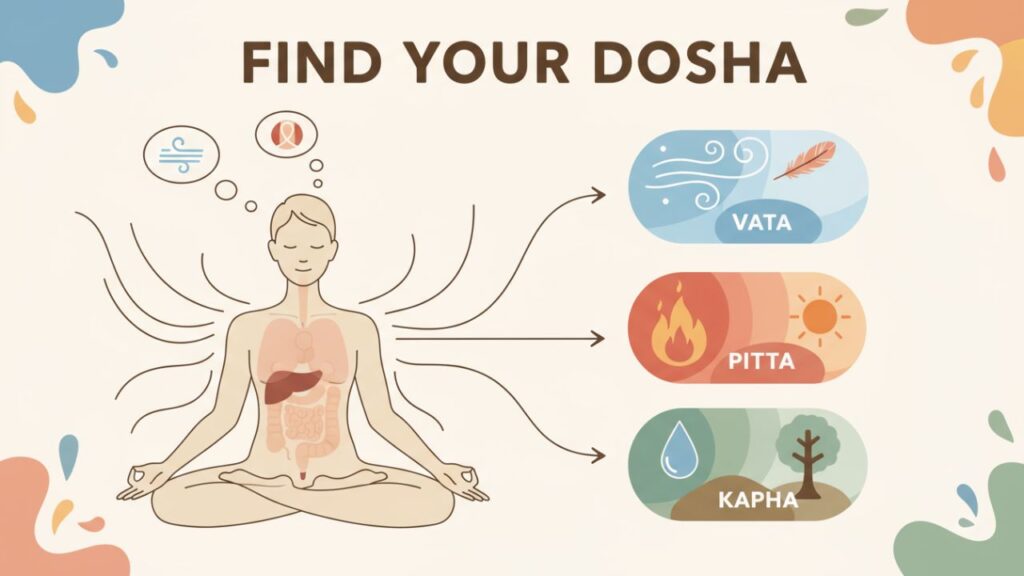
Most people read one paragraph and say “I am Vata” or “I am Pitta.” That is not enough. Real first step is to notice your body and mind for a week.
Simple way to check:
- Look at your body frame — thin, medium, or strong.
- Check your skin — dry, warm/oily, or smooth/oily.
- Notice digestion — fast, strong, or slow.
- Watch sleep — light sleeper, normal, or heavy sleeper.
- Check mood — anxious/quick, angry/sharp, or calm/slow.
If most answers point to one dosha, that is likely your main dosha. Many people have two mixed types (like Vata-Pitta). That is okay. The important thing is to be honest and simple.
Why this matters:
When you know your main dosha, you can pick foods, routines and small habits that suit you. If you pick wrong things, you will try hard but not feel better. This step saves you time and gives better results.
Secret 2 — Small food and routine changes beat big plans
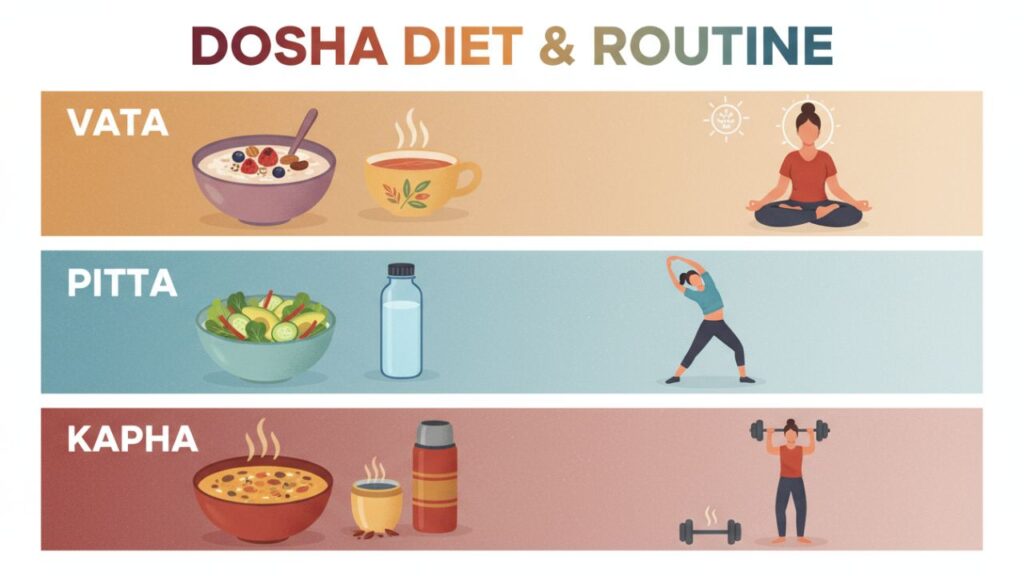
People think big changes are needed. But in Ayurveda, small daily things matter most. A small change every day gives big result in one month.
Simple food tips by dosha :
• For Vata: eat warm cooked foods. Avoid too much raw salads and cold drinks. Eat soups, rice, steamed veggies. Use a little oil or ghee. Eat at regular time.
• For Pitta: eat cooling foods. Avoid spicy, fried, and sour things. Eat more fruits like watermelon, cucumber, and milk (if you can). Stay in shade if hot.
• For Kapha: eat light and warm. Avoid heavy, oily, and sweet foods. Use spices like ginger and black pepper. Move after meals.
Easy routine tips by dosha:
• Vata: sleep early, avoid loud late-night screen time, do gentle yoga or walking. Keep warm.
• Pitta: avoid anger and hot sun in the day, do calm walks in nature, practice breathing to cool down.
• Kapha: exercise in morning, wake up on time, do short walks after meals, avoid long naps.
Little daily habit examples:
• Drink warm water in morning — helps digestion.
• Walk 20 minutes after lunch — helps blood and digestion.
• Sleep by 10–11 pm — gives good rest.
• Breathe for 3 minutes when stressed — simple but works.
Why small changes work:
Big plans are hard to keep. Small habits fit into your day. After two weeks, they turn into your normal way of living. And that keeps your dosha balanced.
Tips to Get Your Vata, Pitta, & Kapha back into Balance
Secret 3 — Use simple tests and fixes at home
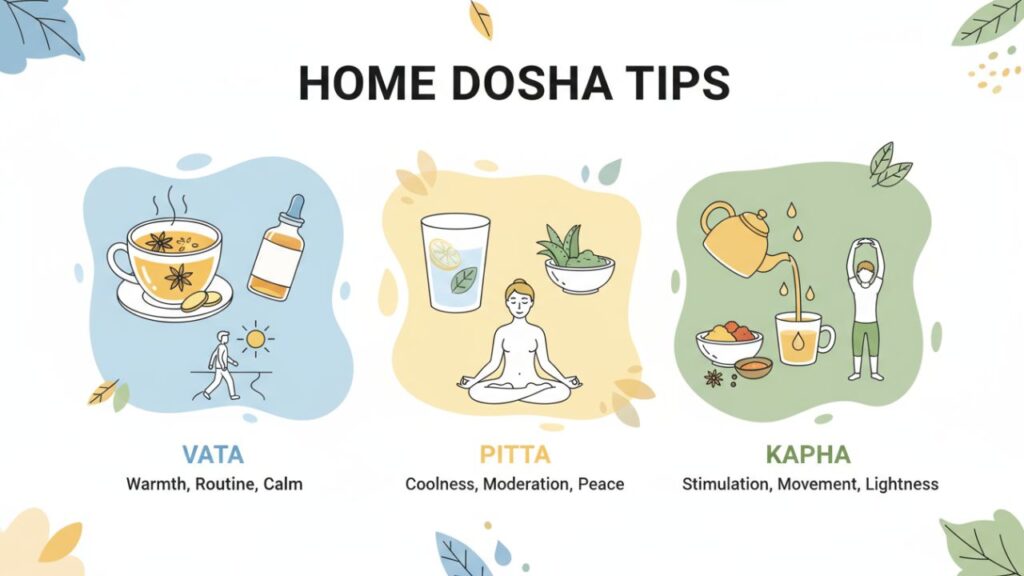
You don’t need a doctor all the time. There are safe, simple ways to test and fix small problems at home. These are not medical treatment for serious illness. If you feel very sick, see a doctor.
Easy home tests:
• Tongue check: If tongue is very red and coated, Pitta might be high. White thick coat may be Kapha. Dry and cracked may be Vata.
• Bowel habit: Fast well-formed stools mean good Pitta. Irregular or hard stools can be Vata. Heavy slow stools can be Kapha.
• Sleep and energy: If you sleep little and are active at night — Vata. If you sleep but wake angry — Pitta. If you feel heavy and slow — Kapha.
Simple home fixes:
• For Vata: have warm sesame oil massage before bath sometimes. Eat cooked meals and avoid cold.
• For Pitta: cool showers, avoid spicy food, use cooling herbs like coriander.
• For Kapha: dry brushing before bath, dry and warm foods, move more in morning.
Do this for a month and note changes. Keep a small diary — write one line each day: mood, sleep hours, and one food you ate. This helps you see real shifts. You will notice small wins and that keeps you going.
Extra plain tips that help everyone
Even if your dosha is different from someone else’s, these simple ideas help balance health and life:
• Eat on time. Regular meals keep your digestion strong.
• Drink water but not too much during meals. Small sips are fine.
• Walk 20–30 minutes daily. It clears mind and helps weight.
• Sleep on time and wake up on time every day. Your body loves routine.
• Do short breathing or meditation daily, even five minutes. It calms the mind.
• Avoid processed junk food. Natural food helps balance.
How to use this article step by step — easy plan
Day 1–7: Find your dosha by watching food, sleep, and mood. Keep notes.
Day 8–14: Start one food change and one routine change (for example, warm water in morning + 20 minute walk).
Day 15–30: Add more small changes and see which ones help the most. Keep the ones that work.
After 1 month: You will get a sense of what makes you feel good. Keep doing it.
Short stories — two quick examples
- Ramesh had bad sleep and worried a lot. He found he had Vata signs. He started warm milk and a short walk before bed. After two weeks he slept deeper.
- Priya felt angry and had stomach burn. She was more Pitta. She cut spicy food and drank cucumber water sometimes. She felt calm and her digestion improved in three weeks.
These are simple real things people do. You can too.
Some safe herbs and foods you can try (ask doctor if pregnant or on medicine)
• Ginger — helps digestion and warmth.
• Tulsi (holy basil) — calming and good for breathing.
• Amla (Indian gooseberry) — good for immunity and cooling for Pitta.
• Triphala — helps digestion and clearing things gently.
Be careful and check with a real Ayurvedic doctor if you want special medicines or have strong health problems.
Final simple reminders
• Start small. Do one small habit for a week.
• Watch what works for you. Everyone is different.
• If feeling very unwell, see a doctor. Don’t just self-treat.
• Consistency wins. Small daily work is better than big one-day tries.
Common questions people ask — answered simply
Q: Can one person change their dosha?
A: Your basic dosha stays same, but balance can change. With habits you can make your life balanced even if your dosha is a bit high or low.
Q: Is this also for women and men?
A: Yes. Ayurveda works for both. You just change foods and routines to fit your body.
Q: How fast will I feel better?
A: If you do small daily actions, many people feel better in 2–4 weeks. Big changes may take longer. Be patient and keep it simple.
Q: Should I stop my medicine?
A: No. If you are taking medicine, ask your doctor before changing anything.
Q: Can I take tests online for dosha?
A: Yes, free quizzes are fine to start. Use them with your own notes about sleep, digestion and mood.
Q: Are all herbs safe?
A: No. Herbs can help but check with a doctor, especially if you have other medicine or health issues.
Q: Can children follow dosha tips?
A: Yes, simple food and sleep routines help kids too. But check with a pediatrician or Ayurvedic doctor.
Disclaimer: This article gives general information only. It is not medical advice. If you have a health problem, take advice from a qualified doctor or Ayurvedic practitioner. Do not stop any prescribed medicine without talking to your doctor.
Also Read: