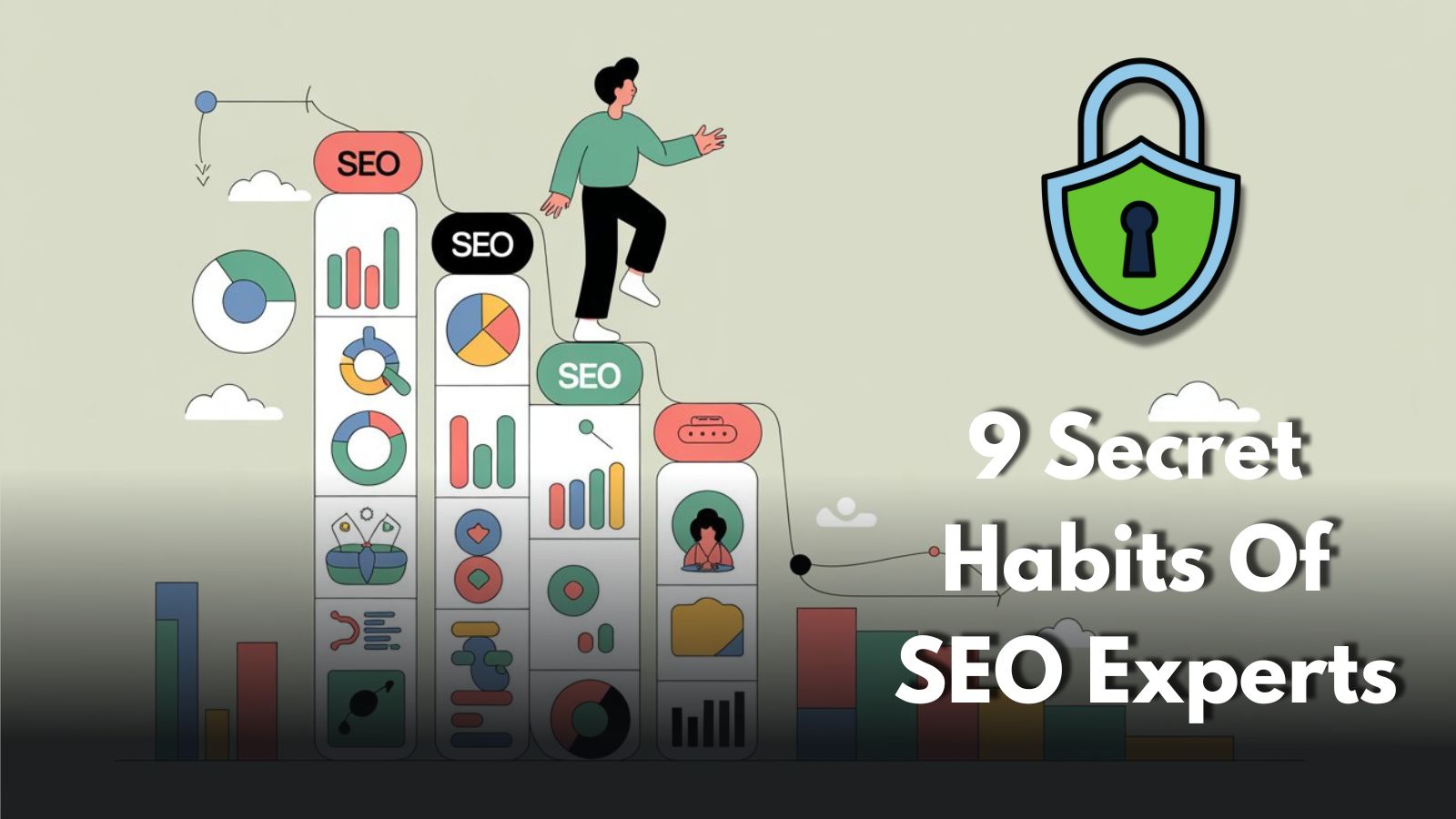
9 Secret Habits Every Successful SEO Expert Has: Full Guide
Hey! So you want to learn SEO and maybe become an SEO expert, right? I remember when I started, I was totally confused. There was so much information online, and it all looked technical and scary. But don’t worry, I’ll guide you like a friend. By the end of this, you’ll know exactly what to do to grow your website and your skills.
Table of Contents
Habit 1: I Learned the Basics First
Honestly, I wasted weeks trying to copy some advanced tricks before I understood the basics. You should not do that.
SEO, which means Search Engine Optimization, is just making your website easier for Google and other search engines to understand. And more importantly, making it useful for people.
Here’s what I focused on first:
- How Google actually ranks pages
- What keywords are and why they matter
- The difference between on-page and off-page SEO
- How technical stuff like speed and mobile-friendliness matters
I want you to think about it like this: Google is like a teacher. Your website is homework. If your homework is neat, correct, and helpful, you get an A. If not, it stays at the bottom of the pile.
Habit 2: I Mastered Keyword Research
I remember spending hours guessing what words people might search. Then I learned about keyword research. It changed everything.
Step 1: Brainstorm
Write down all possible topics your audience wants. For example, if you want to teach SEO:
- “SEO tips for beginners”
- “How to rank on Google”
- “Best SEO tools”

Step 2: Use Tools
| Tool | Free/Paid | Purpose |
|---|---|---|
| Google Keyword Planner | Free | Find search volume & competition |
| Ubersuggest | Free/Paid | Keyword suggestions & difficulty |
| SEMrush | Paid | Competitor keywords & content ideas |
| Ahrefs | Paid | Backlinks, keyword research, rank tracking |
I always start my SEO work with proper keyword research using reliable tools like Google Keyword Planner to find what people are searching for.
Step 3: Pick the Right Keywords
- Long-tail keywords are your friends. For example, “easy SEO tips for beginners” instead of just “SEO tips”
- Look at how many people search for it and how hard it is to rank
- See what competitors are doing and think how you can be different
Tip from me: Long-tail keywords bring people who actually want what you offer. Don’t ignore them.
Habit 3: I Write Content That Helps People
The biggest mistake I made was writing content that sounded “SEO-friendly” but was boring.
What I learned: Write for humans, not robots.
Step 1: Understand what people want
- If someone searches “best SEO tools”, they want a list.
- If someone searches “how to do SEO”, they want a guide.
Step 2: Structure your content
- Use headings (H1, H2, H3)
- Keep paragraphs short
- Use bullet points
- Give examples
Step 3: Use keywords naturally
- Put main keyword in title and headings
- Related keywords in body
- Add images and use alt text
- Link to your other pages
Example: Instead of “SEO SEO SEO SEO,” write something like:
“If you want to learn SEO, start with keyword research, create helpful content, and build links. This will help your site rank better and attract the right people.”
Habit 4: I Focused on On-Page SEO
On-page SEO is just making your own pages better.
What I always check:
| Element | How to Optimize |
|---|---|
| Title Tag | Include main keyword, under 60 characters |
| Meta Description | Brief, attractive, include keyword |
| Header Tags | H1 for title, H2/H3 for sections |
| Content | High-quality, helpful, keyword-rich |
| Images | Use descriptive filenames and alt text |
| Internal Links | Link to other relevant pages |
Remember, if your page is messy, Google won’t understand it. Clean structure = higher rank.
Habit 5: Technical SEO is Important Too
At first, I ignored this. Big mistake.
Things to check:
- Page speed – compress images, minimize code
- Mobile-friendly – works on phones and tablets
- HTTPS – secure site
- Sitemap & robots.txt – helps Google index pages
- Fix errors – Google Search Console is your friend
Even best content fails if the website is slow or broken on mobile. Trust me, I learned it the hard way.
Habit 6: I Built Backlinks

Backlinks = other websites linking to yours. They show Google that your site is trustworthy.
How I started:
- Guest posting on small blogs
- Creating guides and infographics people want to share
- Joining forums and online communities
- Collaborating with influencers
Tip: One good backlink beats hundreds of spammy ones.
Habit 7: I Keep Learning
SEO changes all the time. Google updates algorithms, trends change.
I follow:
- Moz Blog
- Search Engine Journal
- Neil Patel
- SEO experts on Twitter
I also join communities. Sometimes people share tricks you won’t find in blogs.
If you want to learn SEO from scratch, Moz Beginner’s Guide to SEO is one of the best resources I personally follow.
Example: When Google introduced Core Web Vitals, I had to change my website’s speed and layout. Others who ignored it lost rankings.
Habit 8: I Practice Patience
SEO is not magic. I waited weeks for some pages to rank.
- Update old articles
- Post new content regularly
- Watch results and tweak
- Test strategies
SEO is like planting a tree. You water it, take care, wait. After some time, it grows.
Habit 9: Build Your Personal Brand

If you want people to trust you as an SEO expert:
Step 1: Make a website
- About page
- Portfolio
- Blog
- Contact info
Step 2: Be on social media
- LinkedIn: connect & share
- Twitter: join discussions
- Facebook Groups: learn & teach
Step 3: Show results
- Traffic growth
- Ranking improvements
- Case studies
Tip: Even small wins matter. Show them!
Bonus Tips
- Start your own blog to practice
- Take freelance projects
- Internships are gold
- Focus on helping people first, rankings second
- Use tools like Google Analytics, Search Console, Ubersuggest
Common Mistakes I Made
| Mistake | Solution |
|---|---|
| Stuffing keywords | Use naturally |
| Ignoring mobile | Always check mobile view |
| Slow site | Optimize images & code |
| Not tracking results | Use Analytics & Search Console |
| Buying backlinks | Focus on quality |
FAQs
Q: How long to become expert?
A: 6–12 months if you practice regularly.
Q: Do I need coding?
A: Basic HTML helps but not must.
Q: Can I earn from SEO?
A: Yes! Freelancing, jobs, or your own site.
Q: What tools for beginners?
A: Google Analytics, Search Console, Ubersuggest
Q: Are certifications necessary?
A: No, but helps credibility.
Conclusion
I hope you see now. SEO is a journey, not magic to become SEO Expert. Follow these habits:
- Learn basics
- Master keyword research
- Write content that helps
- On-page SEO
- Technical SEO
- Build backlinks
- Keep learning
- Practice patience
- Build personal brand
You have to start small, keep practicing, and stay curious. Trust me, it works. Soon you’ll see your site grow and your skills improve. 🚀
Disclaimer: This article is for educational purposes only. Results may vary depending on your individual efforts, website niche, and competition. Always follow SEO best practices and Google guidelines.
Also Read: