
Is Digital Detox the New Luxury? What Happens When You Unplug for a Week
When was the last time you truly unplugged? Not just switching your phone to silent, but actually setting it aside for hours—or even days—without checking it. For many of us, that idea feels uncomfortable, maybe even impossible. Yet, in today’s hyper-connected world, being offline has become the ultimate indulgence. Forget flashy gadgets and exotic vacations—the new status symbol might just be the digital detox.
Table of Contents

Why a Digital Detox Feels So Radical
Our phones have turned into lifelines. They wake us up, guide us to work, remind us of meetings, keep us entertained, and connect us to everyone we know. But with all that convenience comes an invisible cost: burnout. Constant notifications and endless scrolling leave us restless, anxious, and distracted.
That’s why a digital detox feels almost rebellious. It’s about reclaiming your time and giving your mind a breather. When you unplug, you’re essentially saying, “I choose my peace over my feed.” And in today’s world, that’s nothing short of radical.
The Power of Hitting Reset
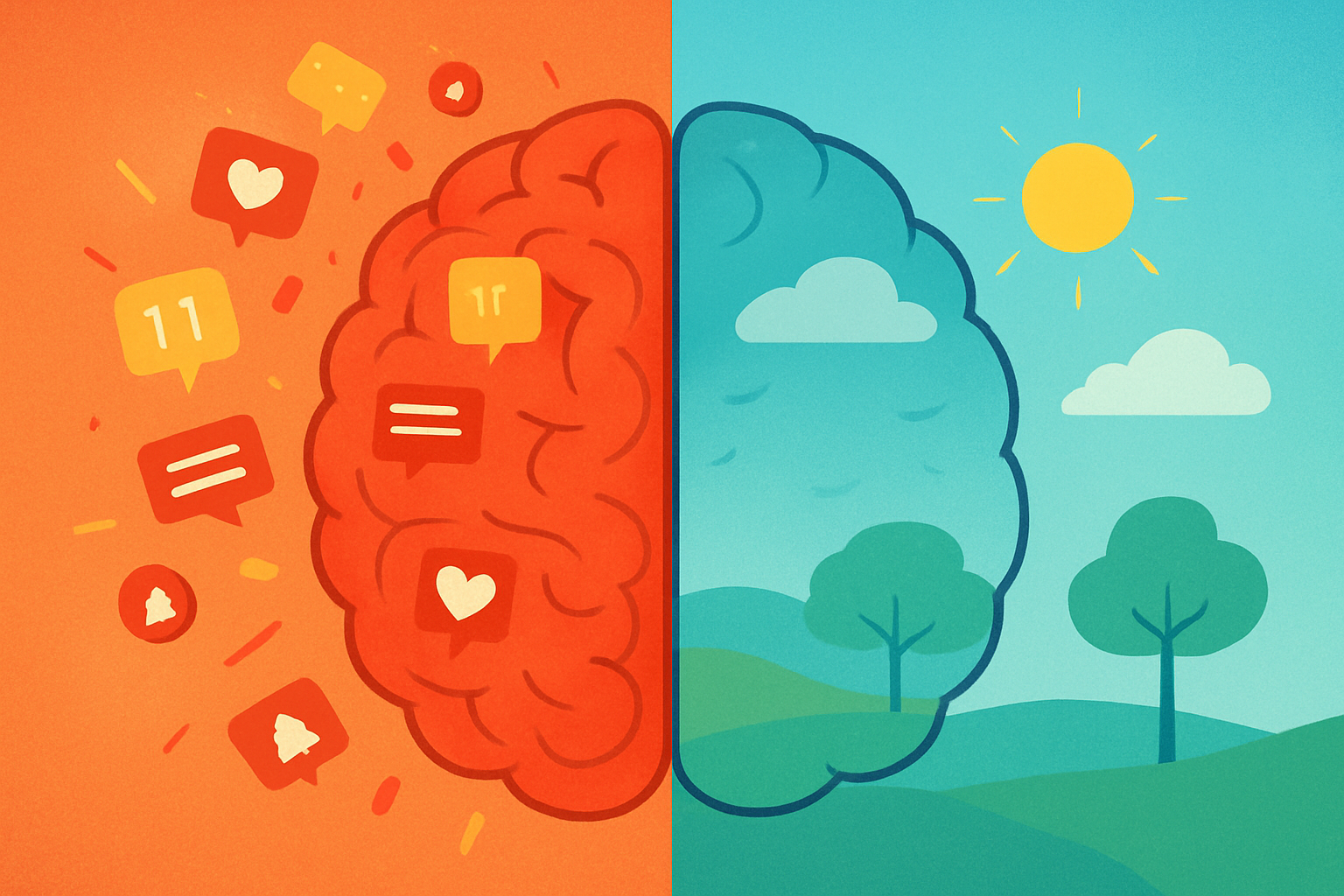
Imagine taking a week off your devices. No endless news feeds, no buzzing group chats, no temptation to check emails at midnight. At first, it feels strange. Your fingers itch to scroll, your brain craves that dopamine hit. But after a day or two, something shifts.
During a digital detox, your brain starts to unclutter. You notice how quiet the world is without constant interruptions. You see things you normally miss—the way sunlight dances across your window, the laughter of people on the street, the sound of your own thoughts. Time slows down. It’s like pressing the reset button you didn’t know you needed.
Digital Detox as the New Luxury
It’s funny—ten years ago, luxury meant being the first to grab the newest smartphone or latest app. Now, luxury means being able to walk away from them. Celebrities go on retreats where phones are banned. High-powered executives pay thousands to attend camps where no Wi-Fi exists. Even everyday people are posting proudly about surviving a week without Instagram.
Why? Because the real luxury isn’t about what you own, it’s about what you can escape. A digital detox gives you freedom—the kind of freedom most people don’t realize they’re missing until they taste it.

What Really Happens When You Unplug for a Week
Let’s break it down. The first two days of a digital detox are the hardest. You keep reaching for your phone, only to remember it’s off-limits. You feel restless, maybe even bored. That’s withdrawal in action.
But then the magic begins. Your sleep improves. Your mind feels calmer. You have longer attention spans for books, conversations, and even your own thoughts. Food tastes better. Music hits differently. Relationships deepen because you’re not distracted by a glowing screen during dinner.
By the end of the week, most people report feeling lighter, more focused, and surprisingly energized. It’s like you’ve been carrying an invisible weight all this time, and suddenly, it’s gone.
The Social Shift: Why Everyone’s Talking About It
The fact that people now boast about a digital detox the way they once bragged about their new car says a lot about our culture. We’ve reached a tipping point where connectivity is no longer rare—it’s constant. So what becomes valuable? Disconnection.
In many ways, a digital detox has become a status symbol. It shows that you have the discipline, freedom, and sometimes even privilege to step away from the digital world. But beyond the bragging rights, it’s also deeply human. It’s about rediscovering yourself without filters, hashtags, or pop-up ads.
How to Try Your Own Digital Detox
You don’t need to fly to a mountaintop retreat to make it happen. A digital detox can start right at home. Here are a few practical steps to try:
- Set clear boundaries. Decide how long you’ll unplug—maybe a weekend, maybe a full week. Treat it like a sacred commitment.
- Replace, don’t just remove. If you usually scroll before bed, swap it with a book or journal. If you use your phone during meals, replace it with conversation. A digital detox works best when you fill the gaps with meaningful activities.
- Tell your circle. Let friends, family, and coworkers know you’re unplugging. It reduces the pressure to “stay available” and makes your digital detox easier to stick to.
- Ease back in. After your detox, don’t flood yourself with hours of screen time. Reintroduce it slowly so you keep some of that calm.
The Emotional Payoff
The biggest reward of a digital detox isn’t just peace of mind—it’s perspective. Suddenly, you see how much of your life was being eaten by endless scrolling. You realize how much more present, alive, and connected you feel when you’re not glued to a screen.
People often say a digital detox makes them more creative, improves their relationships, and gives them a new appreciation for everyday life. And once you taste that freedom, you’ll crave it again and again.
The Takeaway
Luxury used to be about “more”—more gadgets, more apps, more features. But in today’s noisy world, true luxury might be about “less.” Less distraction, less chaos, less noise.
So, is a digital detox the new luxury? Absolutely. It’s not just a break from your phone—it’s an investment in yourself. If you’ve never tried it, maybe this is your sign. Give yourself a week offline. Experience what it feels like to live fully in the moment.
Because at the end of the day, the greatest luxury you can give yourself isn’t something money buys—it’s the peace that comes from unplugging.
More about us: