
7 Shocking Solo Travel Packing Secrets (Under 15 Mins!)
Traveling alone can be one of the best experiences of your life. You feel free, make your own plans, and enjoy every moment your way. But if you carry too much stuff, the fun can quickly turn into stress. That is why smart solo travellers follow one rule — pack light and travel smart.
In this guide, we will talk about simple and clear ways for solo travel packing. You’ll learn what to carry, how to pack, what to avoid, and how to stay organized while keeping your bag small and easy to manage.
Table of Contents
Why Minimalist Solo Travel Packing Makes Travel Easier
When you travel light, everything becomes simple.
You move easily through airports, buses, or trains. You don’t wait at luggage belts. You don’t worry about lost bags. You also save money on baggage fees.
Here’s why solo travellers love minimalist packing:
- Less weight means less stress on your shoulders.
- You can take a carry-on and skip check-in queues.
- Easier to move around when changing cities.
- Your mind feels free because you carry only what you need.
Minimalist packing is not about giving up comfort. It’s about keeping only what truly helps you on the trip.
Step 1: Choose the Right Bag
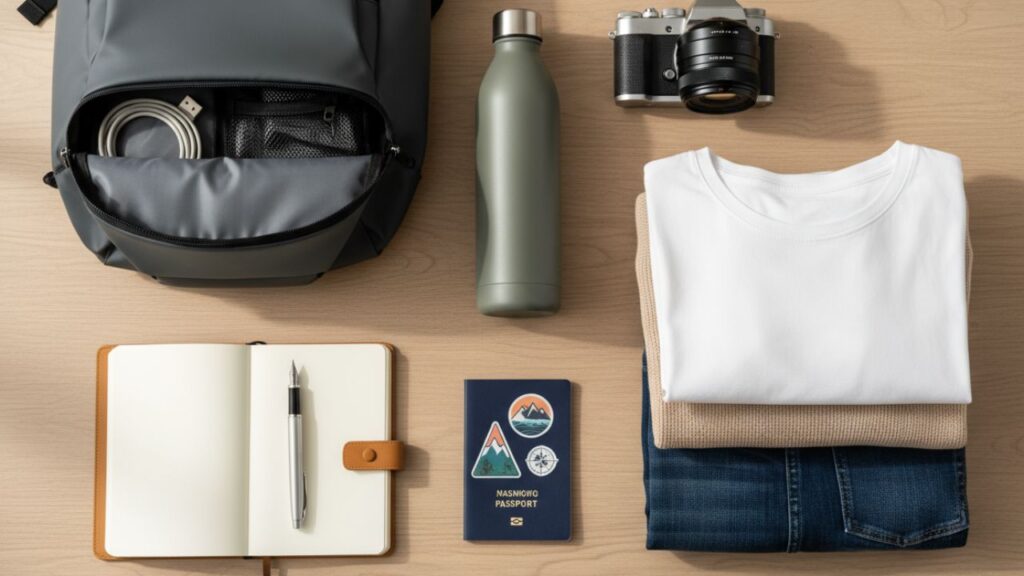
Your bag is the heart of minimalist travel. It decides how much you can carry and how easy your journey will be.
A good minimalist travel bag should:
- Be light in weight (around 20–30 litres).
- Have strong zippers and padded straps.
- Have just a few compartments (too many pockets create confusion).
- Fit in the overhead cabin (carry-on size).
Pro tip:
Don’t buy a huge bag. When you buy a big one, you will always try to fill it up. A smaller bag makes you think smart and pack smart.
Step 2: Plan Before You Pack
Before you start putting things inside, sit down and make a small plan. Ask yourself:
- How many days is this trip?
- What weather will I face?
- Will I wash clothes there?
- Do I need formal wear or just casual?
Once you know your plan, lay out all the items on your bed or floor. Look at them and remove anything you are unsure about. If you think “maybe I’ll use this,” leave it — because most of the time, you won’t.
Step 3: Build a Smart Packing List
Here’s a simple checklist that works for most short trips (4–7 days). You can adjust based on your travel style and season.
| Category | Item | Notes |
|---|---|---|
| Clothing | 3 shirts or tops | Quick-dry fabric helps a lot |
| 2 pants or bottoms | One casual, one semi-formal | |
| 1 jacket or hoodie | Lightweight and foldable | |
| 1 pair of shoes | Wear on travel day | |
| Underwear and socks | For each day + 1 extra | |
| Toiletries | Toothbrush, toothpaste, soap, deodorant | Use travel-size items |
| Small towel | Quick-dry type | |
| Tech | Phone + charger | Add a small power bank |
| Adapter (if needed) | Universal plug saves space | |
| Documents | ID, passport, tickets | Keep digital and paper copies |
| Extras | Reusable water bottle, sunglasses, earphones | Keep it light |
You can fit all this in one 20–25L backpack easily.
Step 4: How to Pack Everything Right
Once you know what to take, it’s time to pack smartly.
Follow this order:
- Start with heavy items (like shoes or charger) at the bottom or close to your back.
- Roll your clothes instead of folding — this saves space.
- Use small pouches or packing cubes for clothes, toiletries, and tech.
- Fill small gaps with socks or undergarments.
- Keep important documents and chargers in an easy-to-reach pocket.
Simple cube setup example:
- Cube 1 → Shirts and underwear
- Cube 2 → Pants and jacket
- Cube 3 → Toiletries and cables
Rolling and grouping make it easy to unpack and repack.
Step 5: Learn What to Skip
Minimalist travel is not just about what to carry — it’s also about what to leave behind.
Skip these items:
- Big bottles of shampoo or lotion
- Extra shoes “just in case”
- Heavy books (use phone or Kindle)
- Too many gadgets
- Fancy outfits you’ll never wear
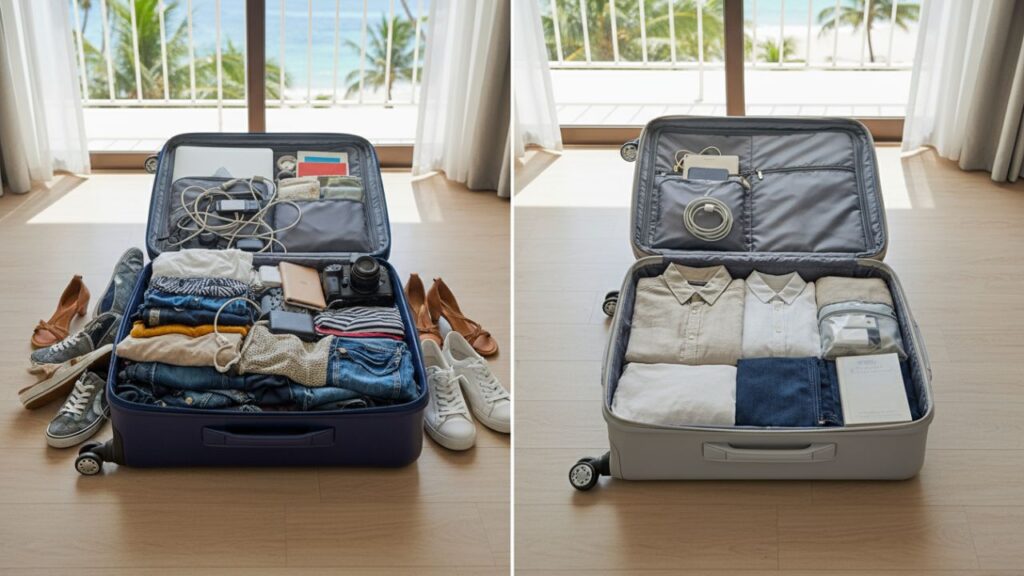
If you are not sure about something, imagine yourself carrying it for a full day. Still feels fine? Then maybe it’s worth taking.
Step 6: Clothes and Laundry Tips
You don’t need new clothes for each day. Wash and reuse.
- Choose neutral colors so you can mix and match.
- Carry clothes made from quick-dry material.
- Wash small items like socks or underwear in the sink.
- Hang them overnight — they’ll dry by morning.
- Wear your bulkiest outfit during travel to save bag space.
For example, a light jacket can go with almost any outfit. Dark pants hide dirt better, so you can wear them more than once.
Step 7: Pack Small, Stay Safe
When travelling alone, safety is as important as packing.
Keep your bag simple and always near you.
Here are some small habits that help:
- Use a lock on your bag if needed.
- Keep a small pouch for passport and money under your clothes.
- Save copies of your documents online.
- Don’t show expensive gadgets in public.
- Always know where your main bag is placed.
These are simple steps but they can save you from big problems later.
Money and Budget Tips for Solo Travellers
When you pack light, you automatically save money — fewer baggage fees, less shopping, less stress.
A few money tips:
- Carry some cash and one card separately.
- Keep emergency money hidden in your bag.
- Use a refillable water bottle to save small daily costs.
- Plan your meals and transport early to avoid last-minute spending.
Extra Small Items That Help a Lot
Sometimes small things make a big difference.
Here are a few that many solo travellers always carry:
- A tiny first-aid kit (bandages, basic medicine)
- Earplugs and eye mask for better sleep
- A small microfiber towel
- Pen and small notebook for notes or directions
- Foldable tote bag for shopping or laundry
All these items are light, useful, and take almost no space.
Sample 5-Day Packing Example
To make it clear, here’s how your packing can look for a 5-day solo trip:
| Day | Outfit | Notes |
|---|---|---|
| Day 1 | T-shirt + jeans | Wear while travelling |
| Day 2 | Shirt + pants | Casual outing |
| Day 3 | Repeat Day 1 outfit | Washed at night |
| Day 4 | T-shirt + shorts | Relax day |
| Day 5 | Shirt + jeans | Travel back |
Add one jacket, one pair of shoes, a few accessories, and you’re ready. You don’t need more.
How to Test Your Packing Before the Trip
Do a simple test at home.
Pack your bag fully and carry it for 15–20 minutes around the house or outside. If it feels heavy, remove 2–3 things. You’ll quickly know what is not necessary.
Try to open and repack your bag twice. This helps you remember where everything is kept. When you travel alone, this small practice saves a lot of time and stress later.
Mindset of a Minimalist Traveller
The biggest change is not in your bag — it’s in your mind.
When you start thinking like a minimalist, you focus on moments, not things. You stop worrying about how many clothes you have and start enjoying where you are.
Remember:
- Comfort is not about more things, it’s about smart choices.
- You can always buy what you forget — but most times, you won’t need it.
- Packing light gives you freedom. That’s the true reward.
Quick Packing Checklist (Copy Before Trip)
- Backpack (20–30L)
- 3 shirts/tops
- 2 pants/shorts
- 1 jacket
- 1 pair of shoes
- Underwear + socks
- Toiletries (travel-size)
- Phone + charger
- Power bank (optional)
- Travel documents
- Small towel
- First-aid kit
- Reusable water bottle
Tick each item as you pack. If something feels extra, remove it.
Final Words
Travelling light doesn’t mean missing comfort. It means being smart, quick, and free. When you pack less, you enjoy more. You move faster, meet more people, and handle things easily.
Start small. Try one short trip with just a backpack. Once you do that, you’ll never want to travel heavy again. Remember — the goal is not to carry everything you might need. The goal is to carry only what helps you live the journey fully.
Learn more about minimalist packing strategies: Click Here
Disclaimer:
This article is for general travel guidance only. It is not professional advice. Always check local travel rules, airline baggage limits, and personal needs before packing. Make sure to carry any required documents or medicines for your health and safety.
Also Read: